Monthly Archives: April 2013

Thaksin come home? (Thailand)

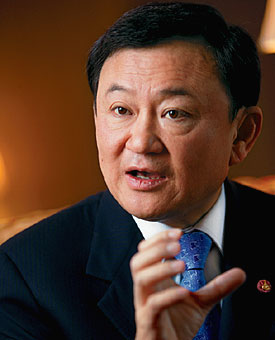
It’s been a while since we’ve heard much from Thailand’s Constitutional Court. Now, with Yingluck Shinawatra almost done with her second year in office, Thaksin Shinawatra’s political allies are attempting to amend the 2007 Constitution in order to allow Thaksin himself to return to the country. However, a member of the Senate has asked the Constitutional Court to stop the move. While the justices have agreed to hear the case, they have not issued an injunction against parliament.

The case raises a fascinating constitutional question: can amendments to the constitution ever be considered unconstitutional? Do courts have the authority to rule on amendments that go through the constitutional amendment process? Few courts have taken such a position. (for more about this issue, check out Gary Jacobsohn’s International Journal of Constitutional Law article).

In Golak Nath v. State of Punjab, the India’s Supreme Court declared that a constitutional amendment could not render the fundamental rights guaranteed in Indian Constitution unenforceable. The 1973 Kesavananda Bharati v. State of Kerala decision reversed this broad declaration, but did assert its authority to strike down laws that contradicted the “basic structure” of the constitution. Later, during Indira Gandhi’s Emergency Rule, it used this power to strike down the 38th and 39th amendments, which would have stripped the court of jurisdiction over elections and rights cases during Emergency Rule.

If Thailand’s Constitutional Court invalidates the amendment, it will be interesting to see if they adopt India’s “basic structure” doctrine. An argument could be made that the 2007 Constitution was implicitly designed to prevent a Thaksin resurrection, so allowing him to return would defeat the entire point of the constitution. However, that would require the justices to extract a very partisan message from the document. More likely is that the court would find that parliament violated the procedures for the amendment process. Either way, the Thai Constitutional Court is back on the radar!

Comments Off on Thaksin come home? (Thailand)

Filed under constitution, Thailand, Thaksin

Big change at the MK (Indonesia)

After Mahfud’s departure, the Mahkamah Konstitusi selected Akil Mochtar as the new chief justice. According to The Jakarta Post, Mochtar won 7 votes compared to two for Harjono. Mochtar was a former GOLKAR DPR member, which continues the trend of having politicians serve as chief justice (Mahfud was a PKB member).

However, Mochtar’s election also brings new questions. In 2010, then-Justice Mochtar was also accused of bribery in a district elections case from North Sumatra. While the MK eventually cleared him of all charges, will the ensuing stigma affect the MK’s reputation?

Thus far, the MK has has acquired a reputation for integrity – not inconsiderable given the extent of corruption in Indonesia’s government. Former chief justices Jimly and Mahfud both had clean reputations and no scandals, which helped the court weather attacks from the DPR and president when the justices issued controversial rulings. Will Mochtar have enough clout to act as a champion for the MK? All we know for sure is that the MK is undergoing an important transition.

Comments Off on Big change at the MK (Indonesia)

Filed under Akil Mochtar, indonesia, Mahkamah Konstitusi

Mahfud is running for president (Indonesia)

This doesn’t appear to be an April’s Fools Joke (if only because it’s already April 2 in Indonesia). Former Mahkamah Konstitusi Chief Justice Mahfud MD announced that he is ready to run for president. Of course, according to the interview with The Jakarta Post, he announced, “”If the opportunity is really there, I am ready to be nominated as a presidential candidate.” That’s president-speak for “I’m in it to win it.”

Of course, this isn’t a surprise – many had speculated that Mahfud resigned from the MK in order to compete in the 2014 elections. Nonetheless, it is a bit surprising that Mahfud has come out so openly without at least securing some party support. In the interview, he declared, “Even as of today, I have yet to know which political party that I might use, but basically all political parties have the same ideology.” There’s a risk that this might alienate some parties, as if he is claiming to be more important than the party that nominates him. Mahfud is popular, but is he really in such a strong position? GOLKAR, PDI-P, GERINDRA, and many of the major parties already have de facto candidates (a notable exception is the Democrat Party).

Stay tuned for more news about Mahfud’s candidacy and whether his legacy on the MK hurts or helps him.

UPDATE (4/3/2013):

According to The Jakarta Post, Mahfud has mentioned that he is in “talks” with some of the parties. However, he still seems intent on alienating parties. On Muslim parties, he said, “as we all know some of the Muslim parties are run by crooks.” It’s not clear if he meant to include PKB – his former party affiliation while he was a legislator in the DPR – amongst that group.

Comments Off on Mahfud is running for president (Indonesia)

Filed under indonesia, Mahfud, president