Mahfud, we hardly knew ye (Indonesia)

The DPR has voted and Pak Arief Hidayat, professor of law at Diponegoro University in Semarang, Central Java, will replace Mahfud MD on the Mahkamah Konstitusi. 
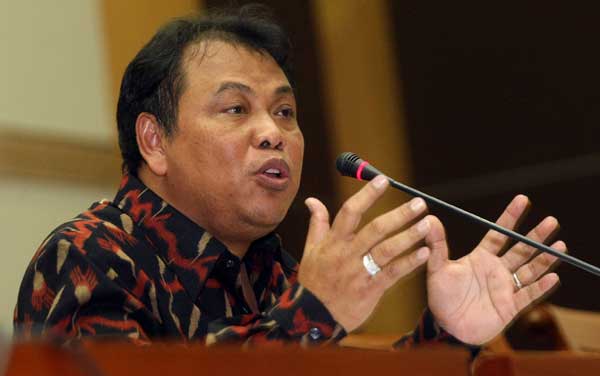
However, his confirmation was somewhat more controversial than previous MK candidates. During his “fit-and-proper” test, he opined that “Indonesia should implement human rights that are compatible with the local context, instead of unconditionally implementing so-called ‘universal values’.” This seemed to insinuate that he would be less vigorous in enforcing human rights than his predecessor. Hidayat was confirmed with 42 out of 54 votes in the DPR, but has been greeted cooly by editorials in Indonesian newspapers.

Frankly, it’s still a bit too early to judge how Hidayat will rule from the bench. Previous MK candidates have been known to make statements designed to appease legislators. Mahfud himself promised that the MK would not legislate from the bench, although critics claim his activism exceeds even that of his predecessor. The real test will come when he decides a case in which human rights seem to conflict with Indonesian or Islamic culture.

Comments Off on Mahfud, we hardly knew ye (Indonesia)

Filed under indonesia, Mahkamah Konstitusi

The race is on! (Indonesia)

With Mahkamah Konstitusi Chief Justice Mahfud MD stepping down, the race to replace him is already underway. The current candidates are Arief Hidayat, Sugianto and Djafar Al Bram, law professors at Indonesian universities. They have already undergone the “essay-writing” portion of the fit and proper test. 

According to The Jakarta Globe, several other candidates, including former Justice and Human Rights Minister Patrialis Akbar and law professors Lodewijk Gultom and Nimatul Huda have dropped out of the race. Patrialis had been the most prominent candidate in the race. According to Ruhut Poltak Sitompul, a member of the House of Representatives Komisi III, Patrialis withdrew because he likely would not have become chief justice. Instead, current justice Ali Mochtar will likely get the role.
With Patrialis out of the race, it also leaves a dearth of candidates with high-profile political experience. Many of the serving justices served either as MPs, ministers, or judges. There is a debate in the literature as to whether political experience helps judges resist demands from the other branches of government. Both Chief Justices Mahfud and Jimly had served in the legislature in some capacity and both were infamous for being canny tacticians. In the U.S., some of the most celebrated justices, such as Earl Warren and Hugo Black, made their careers in politics. 
A law professor might also bring a more doctrinal perspective to the bench. Some Indonesian scholars believe the “politician-justices” are too pragmatic in their decisions. The charge “legislating from the bench” is often leveled. The law professors might bring a more theoretical approach to their judging.
So far, Mahfud is the only confirmed resignation, but Harjono also must resign at the end of this term (he’ll have served two terms). None of the other justices are required to retire, so it looks like the bench will remain largely the same.

Comments Off on The race is on! (Indonesia)

Filed under indonesia, Mahkamah Konstitusi

The court is now in session (Myanmar/Burma)

It’s official!! President Thein Sein has appointed the members, including making Mya Thein the chief justice. Official announcement from The New Light of Myanmar below:

Republic of the Union of Myanmar

President Office
(Order No. 12/2013)
Fullmoon day of Tabodwe, 1374 ME
25th February, 2013
Appointment of Chairman and members of Constitutional Tribunal of the Union


In accordance with Sections 327 and 332 of the Constitution of the Republic of the Union of Myanmar, the following persons have been appointed as Chairman and members of the Constitutional Tribunal of the Union.

(1) U Mya Thein
(Retd Director-General,
Supreme Court of the Union)
Chairman

(2) U Myint Win
Member

(3) U Than Kyaw
Member

(4) Daw Hla Myo Nwe
Member

(5) U Mya Thein
(Advocate)
Member

(6) U Myint Lwin
Member

(7) U Tin Myint
Member

(8) Daw Kyin San
Member

(9) U Myo Chit
Member

Sd/ Thein Sein
President
Republic of the Union of Myanmar

Comments Off on The court is now in session (Myanmar/Burma)

Filed under Burma, constitutional tribunal, Myanmar

And the justices come rolling in… (Myanmar/Burma)

Almost six months after the Constitutional Tribunal members resigned, Myanmar looks like it will get new tribunal members. The President, Pyithu Hluttaw, and Amyotha Hluttaw have submitted nominations. The list includes:

  • Retired Attorney-General’s Office Deputy Director-General U Myint Win (P);
  • Legal Advisor to the President U Than Kyaw (P);
  • Deputy Director-General of the Ministry of Foreign Affairs Daw Hla Myo Nwe (P);
  • Retired Director-General of the Union Supreme Court U Mya Thein (PH);
  • Notary Public Advocate and Supreme Court advocate U Mya Thein (PH);
  • Notary Public Advocate and Supreme Court advocate U Myint Lwin (PH);
  • Retired Director-General of Union Attorney-General’s Office U Tin Myint (AH);
  • Retired Deputy Director-General of Union Attorney-General’s Office Daw Kyin San (AH);
  • Retired Director of the Union Attorney-General’s Office U Myo Chit (AH).
According to Radio Free Asia, the first Mya Thein will likely be the court’s chief justice (although RFA’s article lists him as a former Supreme Court chief justice, so I would treat its report with some skepticism). RFA does quote a Pyithu Hluttaw MP as stating that the (first) Mya Thein should become the new chief justice due to his experience managing the Supreme Court.
While we’re awaiting more details about the nominees’ backgrounds, it seems that each nominating branch had very specific standards for its nominees. The president nominated executive branch officials, including an official from the Ministry of Foreign Affairs. The Pyithu Hluttaw seems to have sought individuals with experience in the Supreme Court, while the Amyotha Hluttaw nominated individuals who served in the Attorney-General’s office. 
As expected, the president drew heavily from the executive branch, but why did the two chambers of the legislature differ so drastically in their appointments? Did the speakers of the Amyotha and Pyithu Hluttaw coordinate their nominations, or do the nominations represent the different institutions of the two chambers? Perhaps we’ll learn more once the tribunal begins functioning again.
The last case on the tribunal’s docket was a petition from the Mon chief minister. We’ll see if the tribunal takes that case up again.
Here is the original New Light of Myanmar article:

Proposed members of constitutional tribunal unveiled

Nay Pyi Taw, 21 Feb-Thura U Shwe Mann, Speaker of Pyithu Hluttaw, notified the parliament of the President’s message to the Pyidaungsu Hluttaw Speaker on formation of the Constitutional Tribunal of the Union.

The proposed members-three by the President, three by the Pyithu Hluttaw Speaker and three others by the Amyotha Hluttaw-of the new tribunal are retired Attorney-General’s Office Deputy Director-General U Myint Win, Legal Advisor to the President U Than Kyaw, Deputy Director-General of the Ministry of Foreign Affairs Daw Hla Myo Nwe, Retired Director-General of the Union Supreme Court U Mya Thein, Notary Public Advocate U Mya Thein, Notary Public Advocate U Myint Lwin, Retired Director-General of Union Attorney-General’s Office U Tin Myint, Retired Deputy Director-General of Union Attorney-General’s Office Daw Kyin San and Retired Director of the Union Attorney-General’s Office U Myo Chit.


Parliamentarians are to file complaints, if any, with firm evidences by 23 February afternoon.-NLM

Comments Off on And the justices come rolling in… (Myanmar/Burma)

Filed under Burma, constitutional tribunal, Hluttaw, Myanmar

Pay for performance? (Indonesia)

Indonesia’s government has increased raised judicial salaries in an attempt to combat corruption. According to The Jakarta Post, salaries had been set at Rp 1.8 million to Rp 4.5 million ($186 to $465) per month, but will rise to Rp. 10.5-45 million (approx. $1,086-4,657) per month, a tenfold increase. Perhaps even more surprisingly, this makes Indonesian judges amongst the highest paid in Asia (Singapore’s are the highest overall).

The Supreme Court has stated its hope that this move will reduce corruption within the judiciary. The logic goes that judges will be less tempted to accept bribes. However, there is little empirical evidence that simply increasing the salaries of public servants decreases corruption. To some extent, public officials will not need to resort to corruption in order to survive. However, plenty of corrupt officials have continued engaging in corruption even after becoming rich. Suharto reaped billions, thousands of times what he would have needed to live a comfortable lifestyle. Cross-national research on corruption is notoriously unreliable (for a review of the literature, see Treisman (2007)).
Overall, this is an encouraging move. It’s hard to imagine any significant downsides to increasing judicial salaries. Even if it doesn’t reduce corruption overnight, it might make the judiciary a more attractive career for the best and brightest lawyers.

Comments Off on Pay for performance? (Indonesia)

Filed under corruption, indonesia, judicial reform